
-
Book Review: Knife Fights: A Memoir of Modern War in Theory and Practice
Brennan Deveraux
Author: John A. Nagl
Reviewed by Major Brennan Deveraux, national security researcher, Strategic Studies Institute, US Army War College
Today’s force still has plenty to learn about counterinsurgency from Operation Desert Storm. John Nagl’s Knife Fights: A Memoir of Modern War in Theory and Practice “a book about counterinsurgency and its journey from the far periphery of US military doctrine to its center, for better and, some would argue, for worse.” The reviewer notes, Nagl’s work “provides a tangible example of the impact junior leaders can have on the service.”
-
Book Review: Co-Intelligence: Living and Working with AI
Zachary E. Griffiths
Author: Ethan Mollick
Reviewed by Lieutenant Colonel Zachary E. Griffiths, Special Assistant to the Chief of Staff of the Army
Zachary E. Griffiths’ review of Co-Intelligence: Living and Working with AI, portrays Ethan Mollick’s book as a concise, easy-to-read tour of artificial intelligence—a user’s guide of sorts. With insightful information about how to use AI, Mollick’s work also covers the history of artificial intelligence and ethical and legal issues that come with using large language models. In his review, Griffiths recommends all Army officers read this book.
©2025 Zachary E. Griffiths
-
Book Review: The World Will Never See the Like: The Gettysburg Reunion of 1913
Wylie W. Johnson
Author: John L. Hopkins
Reviewed by Reverend Dr. Wylie W. Johnson, chaplain (retired), US Army War College class of 2010
The World Will Never See the Like: The Gettysburg Reunion of 1913, by John L. Hopkins, traces the story of the Gettysburg reunion from its inception in 1908 to its fruition in 1918, covering the community perspective, the veterans’ search for reconnection, spectators’ thoughts on the spectacle, and more. In the words of reviewer Wylie W. Johnson, “The takeaway for senior leaders from this compelling book is the overriding necessity for reconciliation.”
©2025 Wylie W. Johnson
-
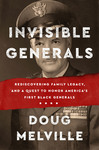
Book review: Invisible Generals: Rediscovering Family Legacy, and a Quest to Honor America’s First Black Generals
Wylie W. Johnson
Author: Doug Melville
Reviewed by: Reverend Dr. Wylie W. Johnson, chaplain (retired), US Army War College Class of 2010
Author Doug Melville’s multigenerational biography presents the little-known story of his family and two of its military veterans who always believed in the American dream—Brigadier General Benjamin O. Davis Sr., the first Black US Army general, and his son, General Benjamin O. Davis Jr., the first Black US Air Force brigadier general. Dr. Wylie W. Johnson reviewed the book because he was so impressed when he heard then–Brigadier General Benjamin O. Davis Jr. speak in chapel at his evangelical college.
Copyright: ©2025 Wylie W. Johnson
Printing is not supported at the primary Gallery Thumbnail page. Please first navigate to a specific Image before printing.