
-
Book Review: Info Ops: From World War I to the Twitter Era
José de Arimatéia da Cruz
Editors: Ofer Fridman, Vitaly Kabernik, and Francesca Granelli
Reviewed by Dr. José de Arimatéia da Cruz, Department of Homeland Defense and Security Issues, Center for Strategic Leadership, US Army War College
Dr. José de Arimatéia da Cruz calls Info Ops a “must-read for any future combatant commander concerned about how our enemies use information and communication technologies within a contested environment to advance their causes and wreak havoc within an increasingly polarized society.” He overviews the book’s topics, including World War I and World War II, social media, Soviet Union propaganda, and even Israel and Hamas, and discusses their immediate relevance, “highly recommend[ing] Info Ops to US Army War College students.”
-
Book Review: Skies of Thunder: The Deadly World War II Mission over the Roof of the World
Heather Venable
Author: Caroline Alexander
Reviewed by Dr. Heather Venable, course director, Airpower Strategy and Operations, Air Command and Staff College
Dr. Heather Venable, course director, Airpower Strategy and Operations, at the Air Command and Staff College, insightfully analyzes multifaceted author and translator Caroline Alexander’s latest history of the China-Burma-India Theater. Venable overviews the book’s four main elements and the two structural topics—the “ ‘Hump’ of the Himalayas” and the land bridge. She praises the author’s “beguiling human and geographical detail” that “brings the CBI Theater to life while casting a critical eye on the human frailties of her research subjects.”
-
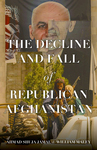
Book Review: The Decline and Fall of Republican Afghanistan
Whitney Grespin
Authors: Ahmad Shuja Jamal and William Maley
Reviewed by Dr. Whitney Grespin, visiting research fellow, King's College London, UK Defence Academy; non-resident fellow, Joint Special Operations University; and Africa Regional Program Lead, DSCA/DSCU Institute for Security Governance
Foreign-policy expert Dr. Whitney Grespin reviews a “deservedly cutting reflection on mistakes made and lessons not learned during the Afghanistan War.” She notes the book’s “valuable perspective,” as one of the authors was in Kabul when it fell. Distilling the book’s contents into a detailed, useful overview, Grespin provides a helpful roadmap for readers interested in these topics and concludes the book is “[a] necessary read for practitioners engaged in security assistance.”
-
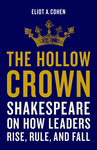
Book Review: The Hollow Crown: Shakespeare on How Leaders Rise, Rule, and Fall
Zachary Griffiths
Author: Eliot A. Cohen
Reviewed by Lieutenant Colonel Zachary Griffiths, special assistant, Office of the Chief of Staff of the Army
Lieutenant Colonel Zachary Griffiths provides an insightful review of Professor Eliot A. Cohen’s book on leadership lessons through the lens of William Shakespeare’s work, a method that “helps readers see common challenges in new ways.” Griffiths describes Cohen’s structural approach to the book—a blend of modern examples with Shakespearean counterparts—and writes that The Hollow Crown’s “effective structure allows chapters to stand on their own while remaining part of a cohesive whole.” Griffiths also notes that “[a] deep appreciation for Shakespeare’s works is not required to enjoy the book,” and that, though the book “occupies an unusual literary space,” it would “rest easily on a bookshelf alongside biographies and excellent leadership texts.”
Printing is not supported at the primary Gallery Thumbnail page. Please first navigate to a specific Image before printing.