
-
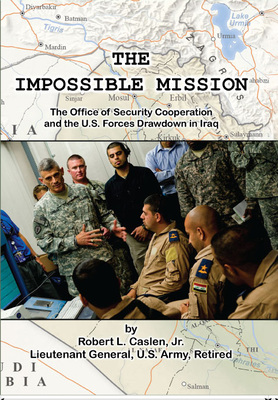
Book Review: The Impossible Mission: The Office of Security Cooperation and the U.S. Forces Drawdown in Iraq
Kate Tietzen-Wisdom
Author: Robert L. Caslen Jr.
Reviewed by: Dr. Kate Tietzen-Wisdom, US Army Center of Military History
A gripping look at the chaotic final chapter of the Iraq War, revealing how bureaucracy, urgency, and geopolitical pressure collided at the moment the US mission needed clarity most.
-
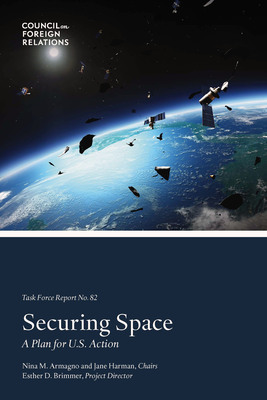
Book Review: Securing Space: A Plan for U.S. Action
David C. Zesinger
Author: Nina M. Armagno and Jane Harman, chairs, and Esther D. Brimmer, project director
Reviewed by: USSF Lieutenant Colonel David C. Zesinger, aerospace operations director, Department of Military Strategy, Planning, and Operations, US Army War College
Securing Space presents an argument for the importance of US advances in the space domain and offers recommendations for achieving them. The reviewer sees this report “as a critical waypoint in identifying the threats in space and reiterating the importance of this domain to our collective way of life.”
-

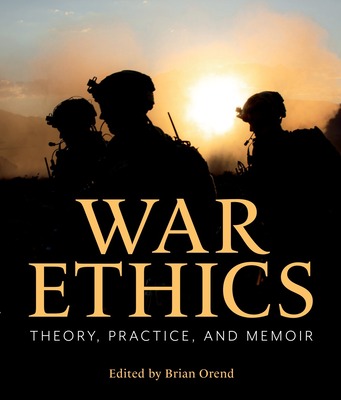
Book Review: War Ethics: Theory, Practice, and Memoir
Geoff Bailey
Edited by Brian Orend
Reviewed by: Chaplain (Colonel) Geoff Bailey, PhD, US Army War College chaplain and director of ethical development, Department of Command, Leadership, and Management, US Army War College
Blending philosophical insight, real-world application, and personal reflection, this volume offers a comprehensive exploration of the ethics of war. From just war theory to the lived experiences of soldiers and civilians, it bridges the gap between abstract principles and battlefield realities. It is a compelling resource for scholars, practitioners, and anyone grappling with the moral dimensions of armed conflict.
-
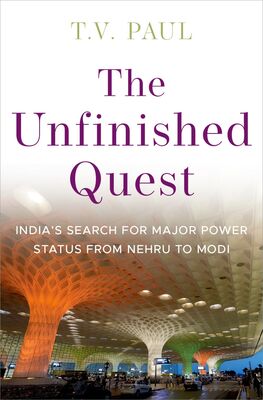
Book Review: The Unfinished Quest: India’s Search for Major Power Status from Nehru to Modi
Patrick Bratton
Author: T. V. Paul
Reviewed by: Dr. Patrick Bratton, professor of national security, Department of National Security and Strategy, US Army War College
In this sweeping analysis, T. V. Paul traces India’s decades-long journey to global prominence, revealing how aspirations for major power status have been shaped—and often stalled—by internal contradictions and external constraints. Blending hard-power metrics with soft-power dynamics, Paul explores India’s evolving role as a “swing power” in the Indo-Pacific and its complex rivalry with China. From Nehru’s nonalignment to Modi’s assertive nationalism, this book offers a compelling framework for understanding India’s place in the shifting global order.
Printing is not supported at the primary Gallery Thumbnail page. Please first navigate to a specific Image before printing.