
-
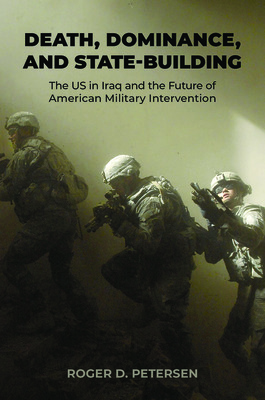
Book Review: Death, Dominance, and State-Building: The US in Iraq and the Future of American Military Intervention
Connor Halliday
Author: Roger D. Petersen
Reviewed by Major Connor Halliday (US Army), instructor of international affairs at the United States Military Academy
Death, Dominance, and State-Building: The US in Iraq and the Future of American Military Intervention, by Roger D. Petersen, analyzes America’s strategy in Iraq over the last 20 years and offers lessons learned for future US military interactions and state-building ventures. Reviewer Connor Halliday notes, “Military practitioners, strategists, and scholars of civil wars and state-building will all find Petersen’s work insightful and thought-provoking. The book’s value lies not just in its analysis of Iraq, but in its broader lessons for future US military interventions.”
-
Book Review: Warfare in Peacetime: Proxies and State Powers
Scott Heal
Author: Christopher C. Harmon
Reviewed by Scott Heal (US Army)
Warfare in Peacetime: Proxies and State Powers defines proxy, lists the advantages and disadvantages of using proxies, and offers seven case studies, including the USSR and East Germany, the United States and the Nicaraguan Contras, and Iran and Hezbollah. The reviewer notes, “those studying limited warfare or the challenges in understanding and addressing gray-zone activities will find Harmon’s framework and analysis practical and informative.”
-

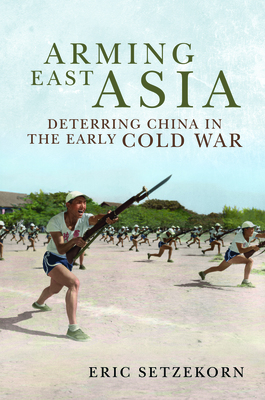
Book Review: Arming East Asia: Deterring China in the Early Cold War
Richard H. Immerman
Author: Eric Setzekorn
Reviewed by Richard H. Immerman, emeritus professor of history, Temple University
Covering American policy toward Asia in the Harry S. Truman and Dwight D. Eisenhower administrations, Arming East Asia: Deterring China in the Early Cold War looks to “enhance the historical sensibilities of contemporary policymakers, thereby enabling them to make informed—and by implication, better—decisions as the United States again confronts an aggressive China in the twenty-first century,” according to the reviewer. It focuses on the years 1952–60, though offers no “surprises for informed readers.”
Copyright: ©2026 Richard H. Immerman
-

Book Review: Nexus: A Brief History of Information Networks from the Stone Age to AI
David R. Leard
Author: Yuval Noah Harari
Reviewed by Colonel Daniel R. Leard, US Army War College Fellow at Princeton University
Built on the ideas that stories are important and bind civilizations, which results in human societies working as information networks, Nexus: A Brief History of Information Networks from the Stone Age to AI, by Yuval Noah Harari, is the third book exploring the evolution of humanity. Harari unpacks the idea that the networks people create have flaws and people tend to exploit these flaws to misuse power. Though the topic is heavy, the reviewer notes, Harari “presents deeply complex issues in ways that people from all walks of life can understand and appreciate.”
©Daniel Robert Leard
Printing is not supported at the primary Gallery Thumbnail page. Please first navigate to a specific Image before printing.